linkedin post 2021-05-02 05:39:15

Uncategorized
HUMAN TRIAL. “A human sensory panel was employed to study the D2O taste. Triangle tests based on two samples of H2O and one sample of D2O (or vice versa), with random success rate of one-third, were presented to the panelists in a randomized order. Panelists were asked to pick the odd sample out—to smell only, to taste only (with a nose clips), or to taste with open nose.” https://lnkd.in/dzPDm5w View in LinkedIn
Read More

linkedin post 2021-05-02 05:37:43

Uncategorized
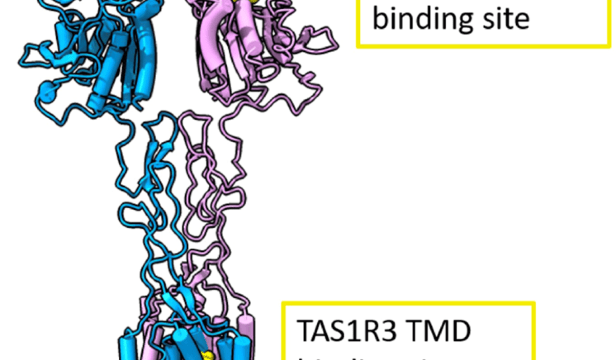
RECEPTOR EFFECT. “This combined approach consistently leads to the conclusion that the sweet taste of pure D2O is a real effect for human subjects due to activation of the TAS1R2/TAS1R3 sweet taste receptor. While present simulations show, in accord with previous experiments, that proteins are systematically slightly more rigid and compact in D2O than in H2O, the specific molecular mechanism of the heavy water effect on the TAS1R2/TAS1R3 receptor remains to be established.” https://lnkd.in/dzPDm5w View in LinkedIn
Read More

linkedin post 2021-04-30 04:41:07

Uncategorized
SCIENCE HATES CHANGE. “After considerable reluctance, the mathematical community were persuaded to accept non-Euclidean geometry as a branch of geometry, but it was considered to be merely of academic interest since the geometry of the physical world was Euclidean.” https://lnkd.in/dSq_i3g View in LinkedIn
Read More
linkedin post 2021-05-02 05:36:27

linkedin post 2021-05-02 05:36:27

Uncategorized
TASTE TESTS. “In this study, we systematically address the question of sweet taste of heavy water by a combination of sensory experiments in humans, behavioral experiments in mice, tests on sweet taste receptor-transfected cell lines, and computational modeling including molecular dynamics (MD) simulations.” https://www.nature.com/articles/s42003-021-01964-y View in LinkedIn
Read More

linkedin post 2021-05-01 06:00:00

Uncategorized
THE SUBJUNCTIVE TENSE. “I believe that "almost" situations and unconsciously manufactured subjunctives represent some of the richest potential sources of insight into how human beings organize and categorize their perceptions of the world.” (Gödel, Escher, Bach by Douglas Hofstadter). https://lnkd.in/dmfn9qW View in LinkedIn
Read More
linkedin post 2021-05-01 05:59:18

linkedin post 2021-05-01 05:59:18

Uncategorized
BITTER RECEPTORS. “Bitter taste is mediated by the taste 2 receptor (TAS2R) gene family, a branch of Family A GPCRs. The human genome has 25 TAS2R subtypes and over a thousand of bitter compounds are currently known, with numerous additional bitter tastants predicted.” https://www.nature.com/articles/s42003-021-01964-y View in LinkedIn
Read More
linkedin post 2021-05-01 05:58:41

linkedin post 2021-05-01 05:58:41

Uncategorized
UMAMI. “A combination of TAS1R3 with another member of the TAS1R family, TAS1R1, results in a dimer that mediates umami taste, elicited by molecules such as glutamate or, in case of the rodent umami receptor, other L-amino acids.” https://www.nature.com/articles/s42003-021-01964-y View in LinkedIn
Read More

linkedin post 2021-05-02 05:48:48

Uncategorized
SO ENDS this first of two weekends on the taste of heavy water. “Less than a century ago, the discovery of the hydrogen isotope deuterium – 2H, but often simplified to D – revealed the existence of another kind of water with the chemical formula 2H2O or simply D2O. A typical hydrogen atom contains one proton within its nucleus. The deuterium isotope, however, has a neutron in addition to the proton, giving the hydrogen atom a greater mass. Hence, water formed with this type of heavy hydrogen is usually called... heavy water.” This has taste, very surprisingly. https://lnkd.in/dUTFQQG View in LinkedIn
Read More